
Chennai-based Agnikul Cosmos plans to launch a prototype AI data centre in orbit by the end of this year, aiming for commercial viability by 2027, according to co-founder Srinath Ravichandran.

Chennai-based space start-up Agnikul Cosmos has successfully tested its 3D-printed booster engine, 'Agnite', marking a significant advancement in reducing production complexity and turnaround time for space missions.

'With this deal, we may see even 50 launches a year within the next few years.'

The appointment comes as Agnikul prepares for Mission 02, a flight that will attempt, for the first time on Indian soil, the recovery of an orbital-class rocket booster and the extension of a rocket's upper stage into an on-orbit platform.

For the first time in India, the facility enables 3D printing of aerospace and rocket components up to one metre in height.

'ISRO will not manufacture any launch vehicles. That will all be done by the private sector or public sector undertakings.'

India is set to take its first steps towards its own human space flight when the uncrewed Gaganyaan mission soars to the skies later this year. Private players in the space sector are also gearing up for launching satellites on home-built rockets.

'I don't think the government will sacrifice such a fine institution for monetary gains.'
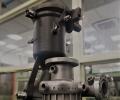
The entire engine, Agnilet, is one piece of hardware from start to finish and has zero assembled parts, reports T E Narasimhan.

'The Indian private space sector is no longer a high-risk bet; it is a highly bankable, globally competitive asset class capable of easing the global small satellite launch bottleneck.'

Preparations are in the final stages by the Chennai-headquartered space-tech startup Agnikul Cosmos for the maiden launch of India's first-ever private launchpad and the second rocket launch by a private sector player.
State-run Hindustan Aeronautics Limited has won a bid under which it will receive technology from the Indian Space Research Organisation for the end-to-end commercial production of the Small Satellite Launch Vehicle (SSLV), a first for the industry as India seeks to become a global hub for small satellite manufacturing and launches.

India took another leap in space infrastructure with the foundation stone laid for a new launch pad at the country's second rocket port in Kulasekarapattinam.

If Rakesh Sharma represented the dreams of a nascent India looking outward, Shubhanshu Shukla embodies a confident India reaching for the controls.

Notably, four portfolio companies-- Agnikul, ePlane, CynLr, and GalaxEye -- of deep-tech investor Speciale Invest made it to the list.
The fuel cost will come down if rockets are launched from Kulasekarapattinam as they will have a straight trajectory and need not have to avoid Sri Lanka, which is being done by rockets flown from Sriharikota.

The new year will witness two unmanned missions under the "Gaganyaan" project, deep ocean exploration project, "Samudrayaan" and many more.

'The launch of Nila, our very first satellite was very emotional as well as nerve wracking. We tried to calm ourselves by cracking some poor jokes!'
'We started AgniKul to show that space transportation should be as simple as road transportation.'

The race for space has got real, and it is attracting funding like never before. In 2022 so far, funding to private players in the space sector has jumped a whopping 61.5 per cent - soaring to $108.52 million compared to $67.2 million in 2021. Propelling it is the government's decision to open up the space sector to private players and the work done by companies like Skyroot Aerospace, the Hyderabad-based start-up behind the launch of India's first privately developed rocket on November 18.

The Department of Space (DoS) plans to realise entirely-built rockets -- GSLV-Mk III and SSLV -- from Indian industry partners, in addition to PSLV, according to a top official of its commercial arm NSIL.

'The current launch is a sounding rocket, this cannot be called a milestone. The importance is this is for the first time a private player is doing it.'

'With India's growing capabilities in the space sector, this creates promising opportunities for enhanced collaboration and market access.'

While Team Indus had backing from Nandan Nilekani, Ratan Tata and Flipkart founders Sachin and Binny Bansal, it could not even muster half of the Rs 4.5 billion it required for the mission to the moon.
While industry is upbeat, start-ups in the space sector are finding it difficult to cater to the demand due to a lack of funding, issues related to policy like foreign funding, intellectual property, etc, and a lack of support in testing.
